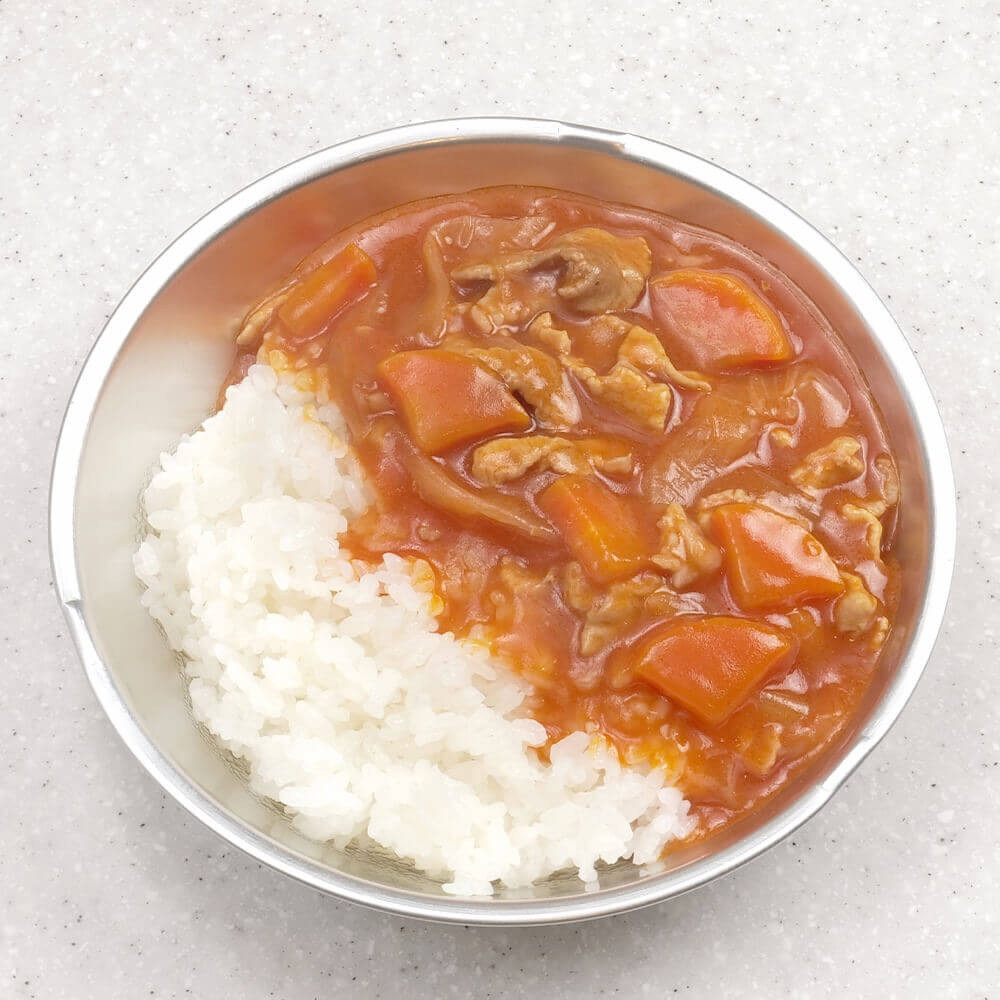
The Evolution of Hayashi Rice
From Western influence to a Japanese staple.
The Arrival of Hashed Beef
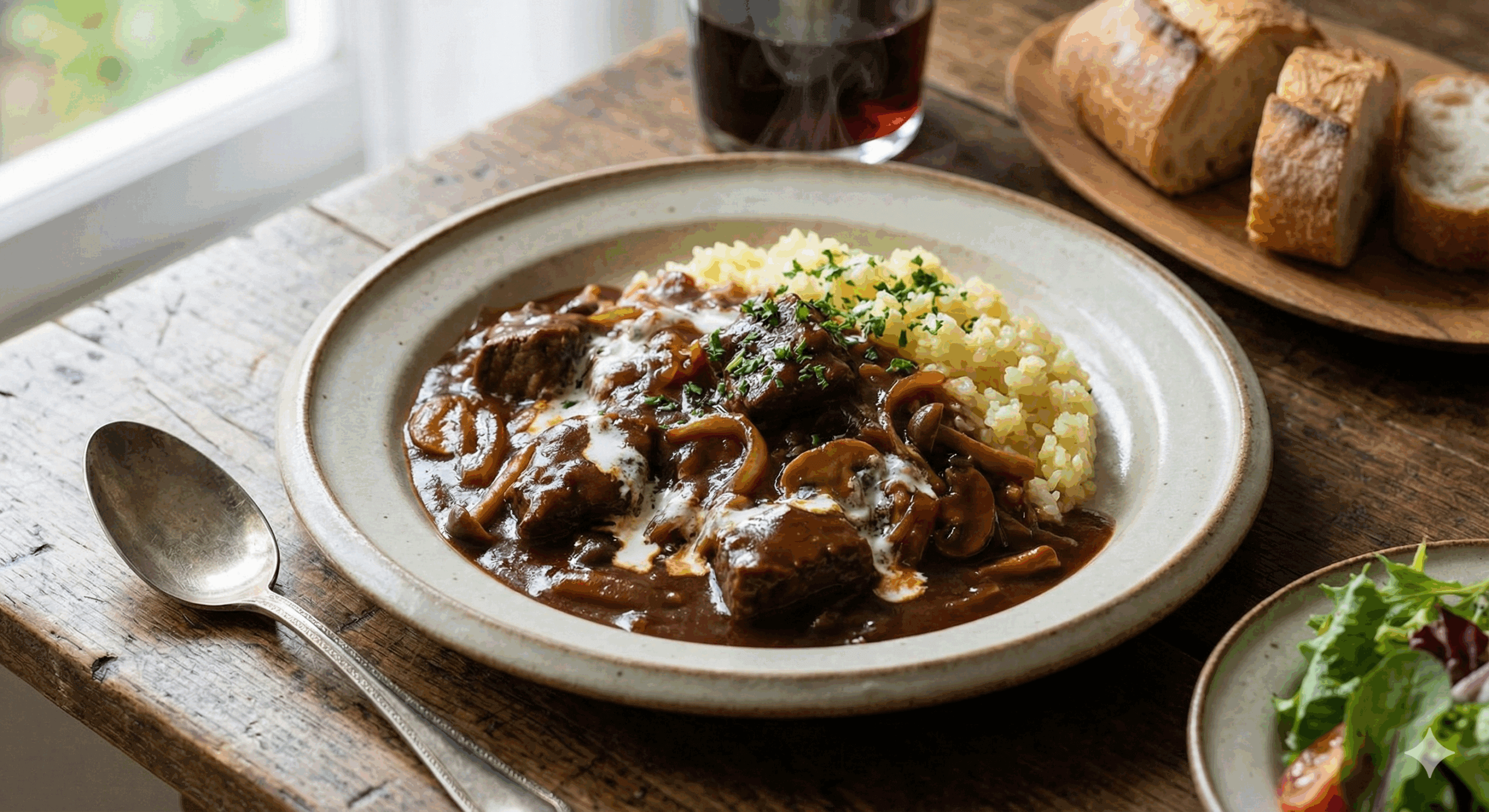
During the Meiji era, as Japan opened its doors, “Hashed Beef” was introduced by Western chefs. It is widely believed that “Hashed” was difficult for Japanese people to pronounce, eventually morphing into “Hayashi.”
The Birth of “Hayashi Rice”
The name “Hayashi Rice” began appearing on menus of famous restaurants like “Maruzen.” The style of serving it over rice and eating it with a spoon became the hallmark of high-society Western fusion cuisine.
One of the “Big Three” Western Foods
Alongside Curry and Cutlets (Katsu), it became a staple in homes and affordable diners. The original recipes required long hours of roasting flour, representing a true labor of love.
Hayashi Rice in Schools
The Rice Revolution
In 1976, rice was officially introduced to Japanese school lunches. This shift turned **Hayashi Rice into an overnight superstar**, as it was the perfect companion for a warm bowl of rice.
Cooking massive amounts of onions in giant rotating cauldrons brought out a natural sweetness that created lasting memories for generations of children.
The “Secret” School Twist
Added for calcium, skim milk surprisingly mellowed the demi-glace sauce, creating a unique, gentle richness.
Since kids are sensitive to sourness, school kitchens developed techniques to cook out tomato acidity by caramelizing onions to perfection.
Three Theories of its Origin
Who or what is “Hayashi”?
A culinary mystery that continues to this day.
Yuteki Hayashi
The founder of Maruzen and a physician. It’s said he created this nutrient-rich dish for patients, making it the most historically romantic theory.
Founder of MaruzenPronunciation
A corruption of “Hashed Beef.” Since “Hayashi” is a common Japanese surname, the name felt familiar and was easily adopted by the public.
Linguistic TheoryChef Hayashi
A cook named Hayashi at the famous Ueno Seiyoken. Legend has it he improvised this dish during a busy lunch rush for his fellow staff.
Ueno Seiyoken🥣 Portion Calculator
*Child portions are calculated as 1/2 of adults.
Prep the Ingredients
The Microwave Magic
CrucialPlace Carrots, Onions, and Oil in a heatproof bowl, mix well, and cover loosely.
Microwave at 600W for 10 minutes! This softens the vegetables and brings out their maximum sweetness instantly.
Thickening & Simmering
Retort Product Trends
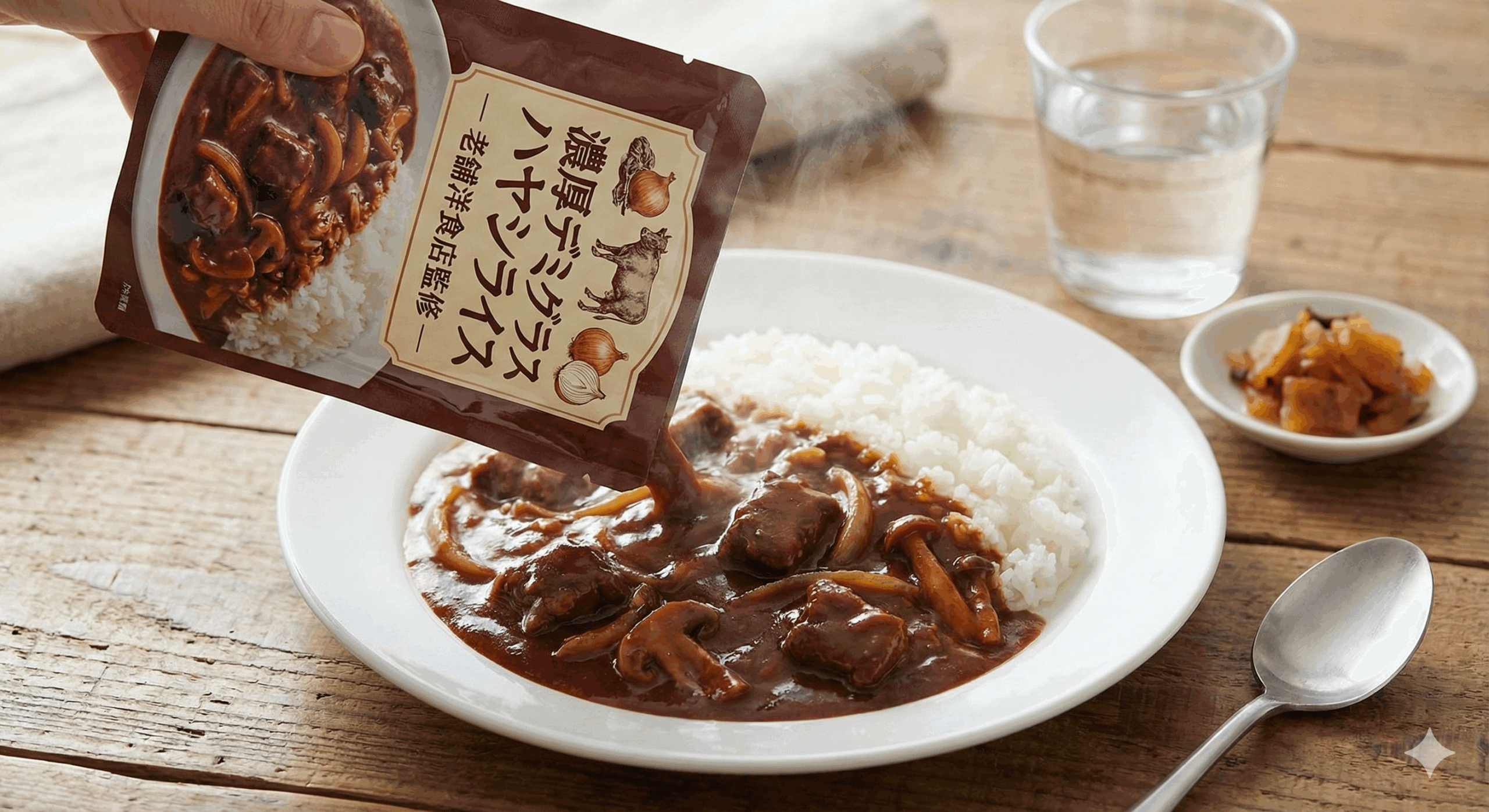
The 3 Pillars of Retort Hayashi
- 🍛 Rich Demi-Glace: Features caramelized butter and red wine richness. Perfect for white rice.
- 🍅 Fresh Tomato Style: Refreshing acidity. Great as an Omurice sauce.
- 🎖️ Premium Chef Style: Uses high-quality veal stock (fond de veau) for a hotel-standard taste.
Global Beef Stew Battles
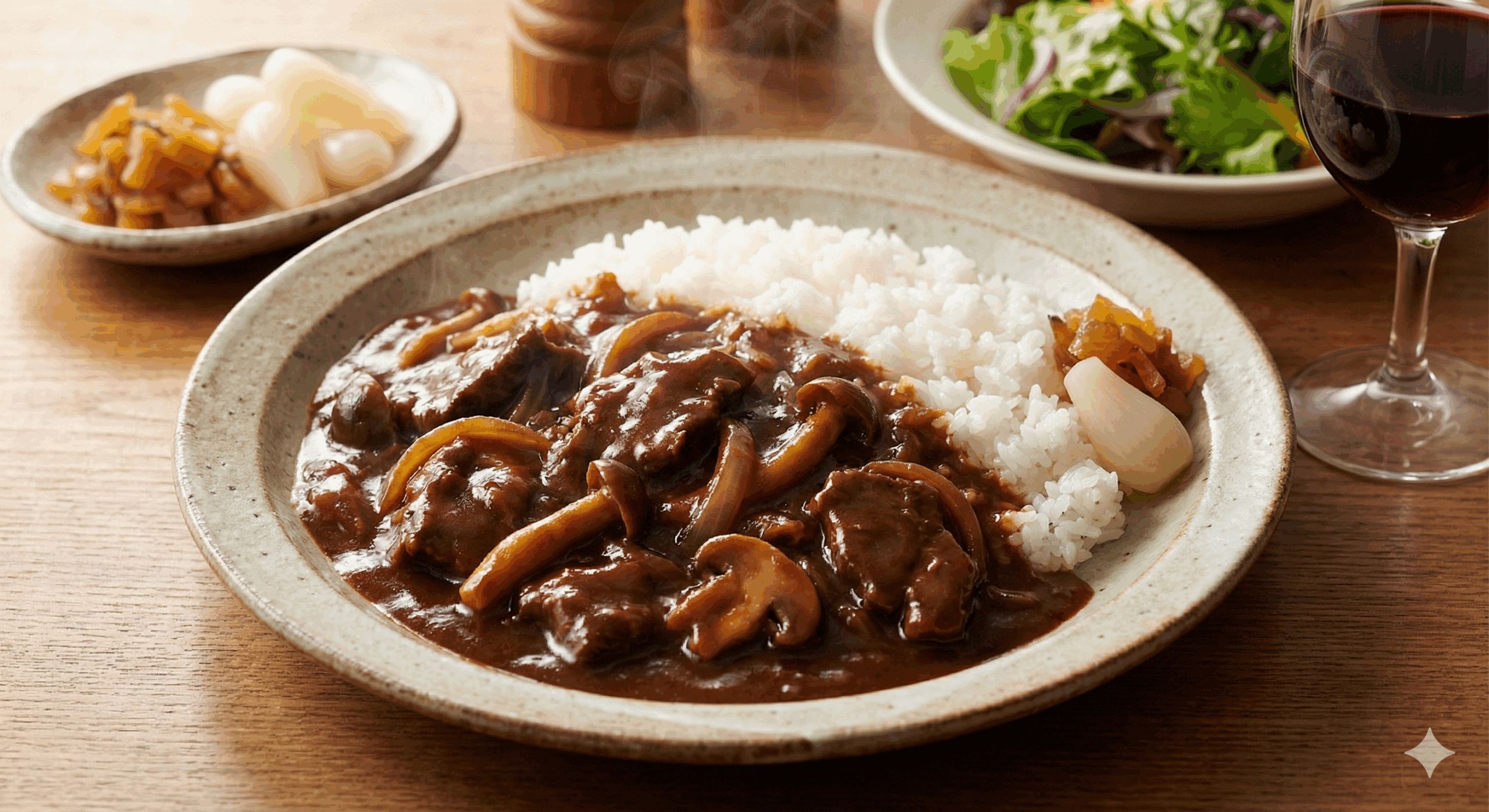
JAPAN
A masterpiece of rice culture, emphasizing a thick, sweet-and-savory profile.
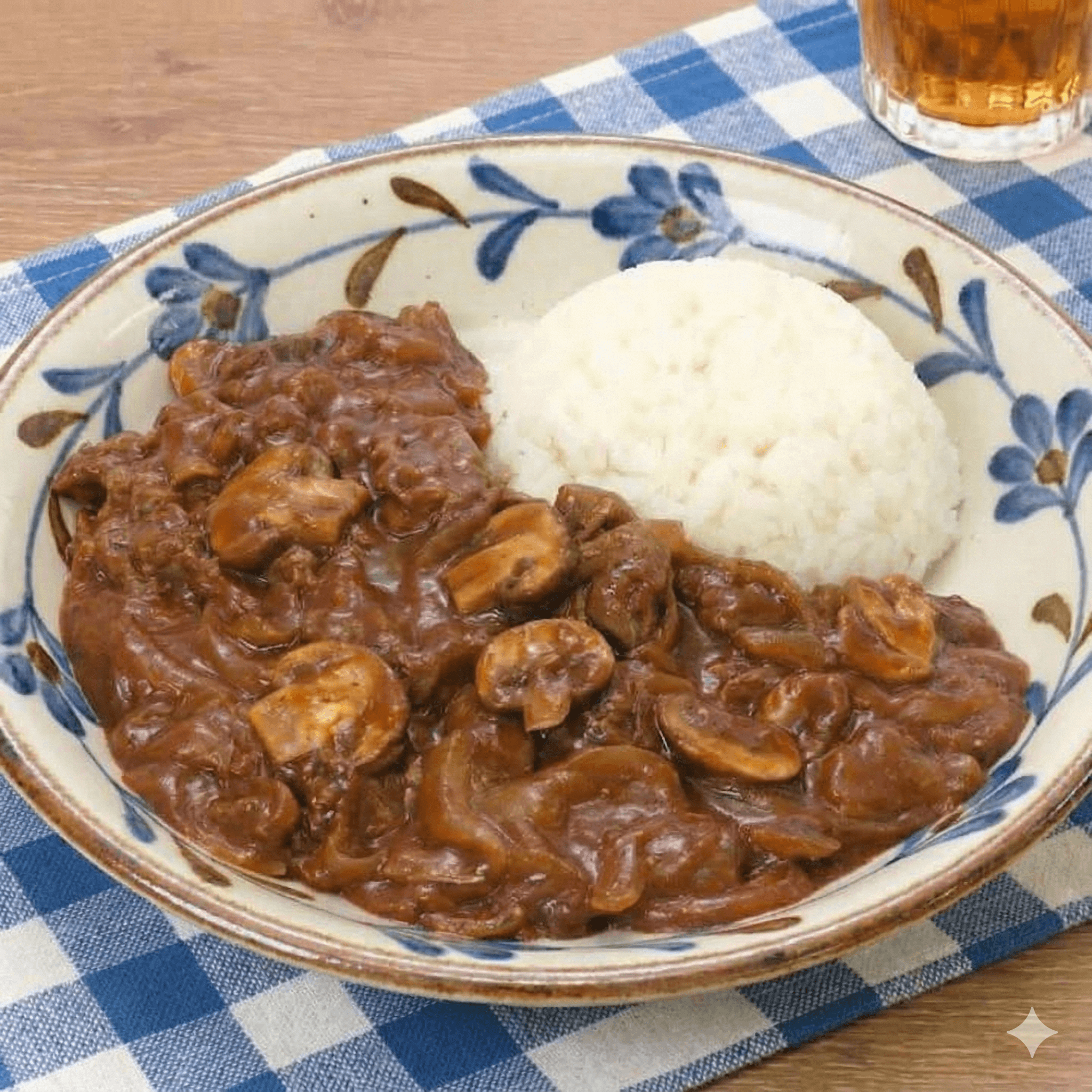
RUSSIA
The tang of sour cream is king. A creamy, pale aristocratic dish: Beef Stroganoff.
UK
Born from the wisdom of utilizing leftover roasts. A light, savory stew: Hashed Beef.
Conclusion: A Masterpiece of Translation
Hayashi Rice is a cultural translation of Western stews, reconstructed specifically to pair with **Japanese Rice**.
By thickening the sauce and adding a “savory-sweetness” that resonates with soy sauce culture, it moved beyond imitation to become a **culinary miracle optimized for the Japanese palate**.